Hands On! Conference
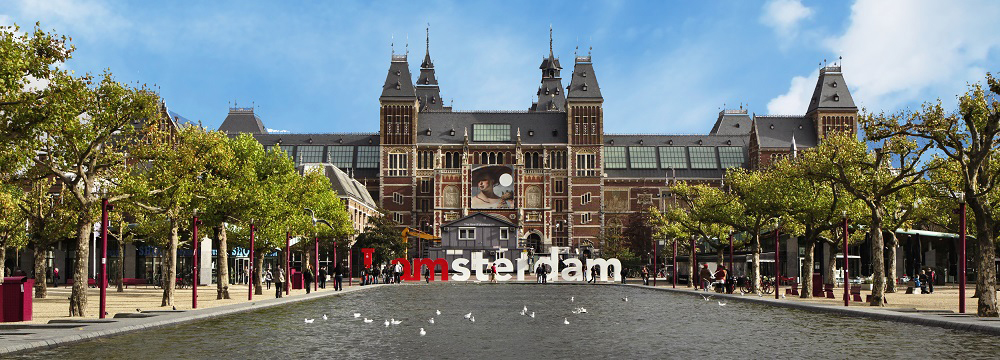
The Rijksmuseum, Amsterdam
October 13 – 16, 2015

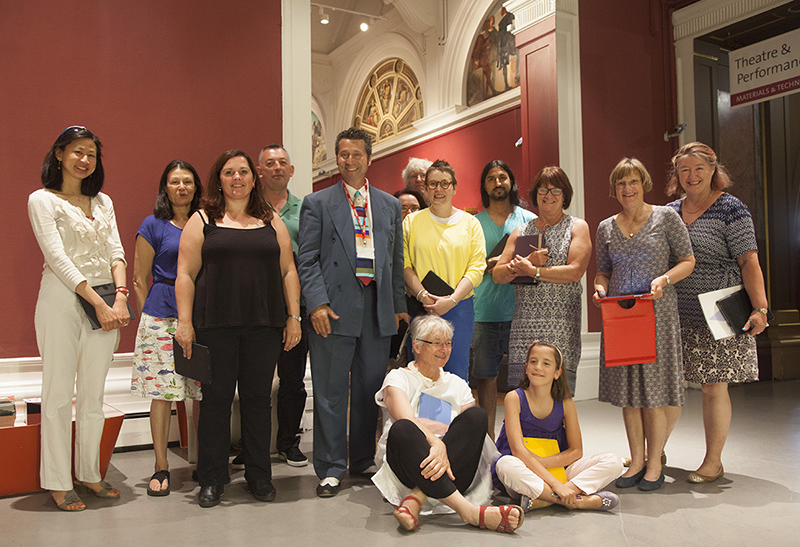
On October 15, 2015, I presented a short 6 minute mini-talk known as a “palorado”, and performed live iPad painting, at the “Hands On!” Conference in the magnificent and recently renovated Rijksmuseum, Amsterdam, The Netherlands. “Hands On!” is the international association of children in museums. The conference is attended by over 300 museum professionals from across the globe and addresses the latest developments in children’s education and engagement in museums.

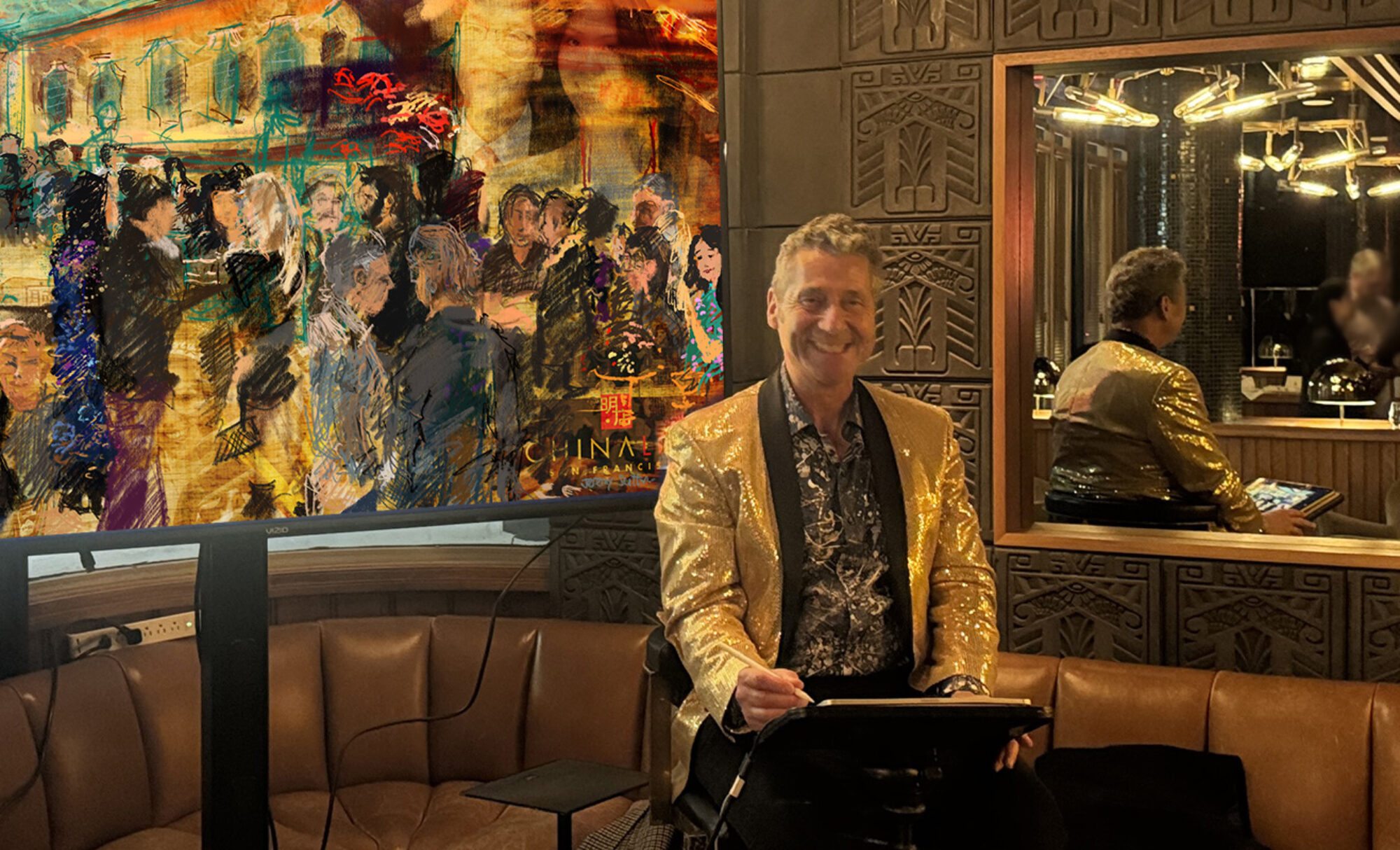
I created live iPad portraits of conference attendees in the closing reception party which took place in the beautiful atrium area of the newly renovated Rijksmuseum. My iPad display, and my painting process, was projected in real time onto a huge screen suspended in the atrium for all to enjoy.

My drawing of Annemies Broekgaarden, Head Public and Education at the Rijksmuseum and President of Hands On! for this conference is shown during it’s creation above.


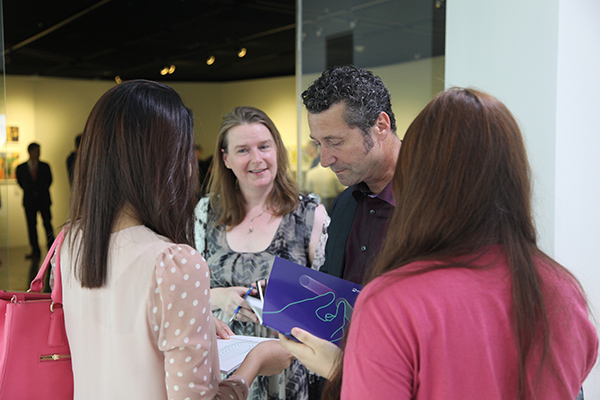
With Annemies and Paul and my drawing of them
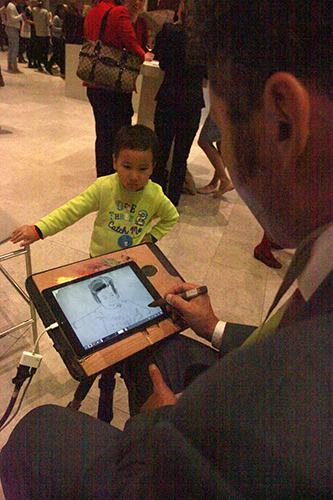

Drawing May using Zen Brush 2
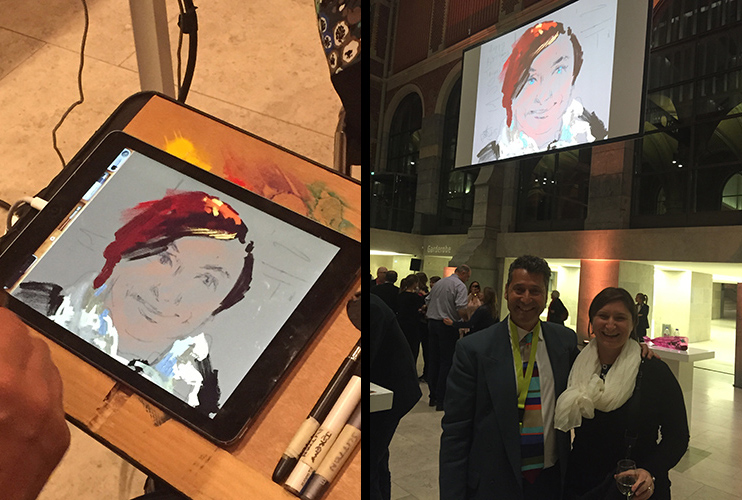
Painting the iPad portrait of Tanya whose birthday it was that same day! She was shy about sitting for her portrait (her friends convinced her) but who then loved the experience and end result!


With Joerg Ehtreiber, Hands On! Treasurer and Director of Frida and Fred Children’s Museum, Graz, Austria – my portrait of him showing on the big screen. Below my iPad portrait of Sandra and Anna.
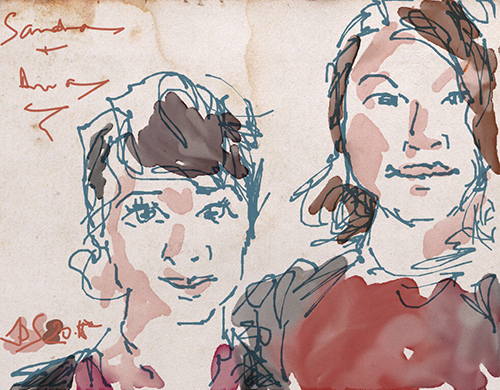
Thank you to the Rijksmuseum and the Hands On! Conference team for inviting me to participate in this wonderful conference.

Teaching Young People in Museums

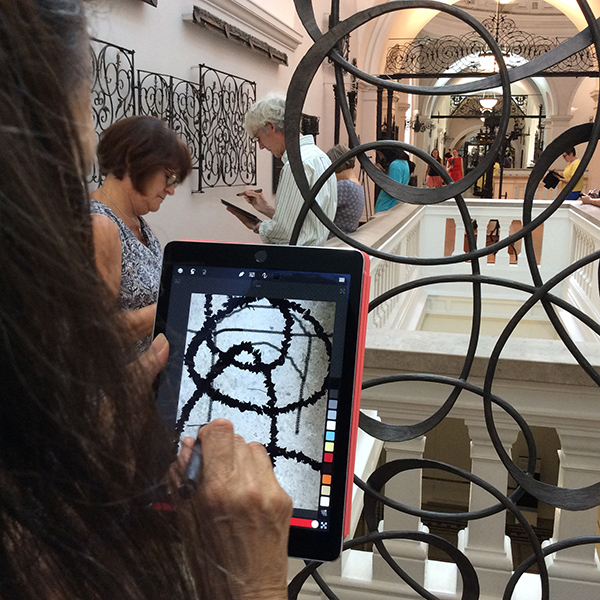
Palorado is Esperanto for talking. It is a way to present an interesting topic in a short time, with or without pictures. During the palorado session at the Hands On! Conference, presenters get six minutes each to discuss issues they are passionate about and to share new thoughts, encourage and inspire! My palorado, Kids, Art & iPads!, shared the incredibly inspiring results of teaching iPad drawing and painting to children aged 7 to 14 years old as part of a summer camp this past summer, which included taking them to draw in museums (the de Young, Legion of Honor and Asian Art Museums, San Francisco) and galleries, plus my experience teaching iPad drawing workshops earlier this year at the Victoria & Albert Museum, London (one student shown drawing in the Weston Cast Court of the V&A immediately below), and at the Seoul Museum of Art. During these iPad art classes the kids gained invaluable artistic, as well as technical, skills and insights. They learned about art history; expanded their artistic horizons; learned first hand how to draw what they see; learned how to apply the principles of composition; learned how to work with patterns and symmetry; and learned how to use color in an expressive way. On the technical side the children learned not only how to use the apps and record replay videos of their creative process, but also the learned about the power of using multiple apps to create a single artwork (“app round-tripping”) to achieve a greater richness of result, taking advantage of the strengths of different media and tools. I’ve included some photos from the classes at the bottom of this web page.

The goal of my palorado presentation, Kids, Art & iPads!, was to encourage museums to bring together kids and iPad drawing, which some are already doing (such as at the multimedia lab of the new Rijksmuseum Teekenschool and at the Learning Center of the Victoria & Albert Museum) as a incredibly effective, empowering and engaging way for children to interact with, and learn from, the museums’ collections, using a medium, a mobile device, that comes naturally to them and through which they are used to engaging with the world.

Here are more photos (below) from iPad classes I have taught that involve young people in museums and galleries and relate to the topic of my palorado talk at “Hands On!”:

iPad drawing in the Asian Art Museum, San Francisco

iPad drawing in the Brian Gross Gallery, San Francisco

iPad drawing in the Hosfelt Gallery, San Francisco


iPad Drawing Workshop, Seoul Museum of Art, Seoul, Korea

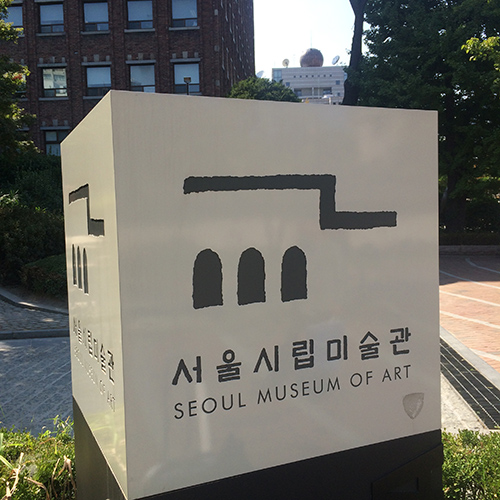
DigiFun Art Festival 2015
Seoul Museum of Art

I was honored to be invited by DigiFun Art to participate in the DigiFun Art: Urban Scape Mobile Art Exhibition & Festival at the Seoul Museum of Art (SeMA), South Korea. The art exhibition opened September 22nd and runs to December 13th, 2015. It is on the third floor of the SeMA Central location, Seosomun Main Building, (Project Room 3F) – please visit if you’re in Seoul between now and December 13th.

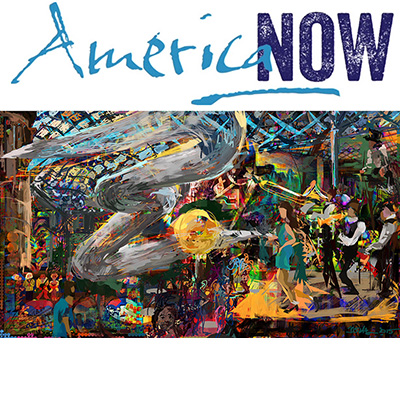
The exhibition features paintings created on mobile devices, including this one (below) that I painted live at the Smithsonian American Art Museum during their America Now! Innovation in Art event.

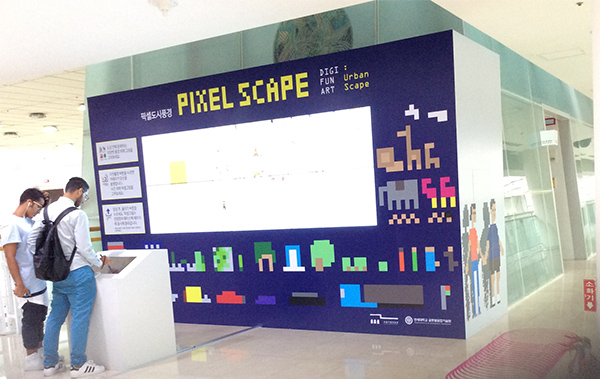
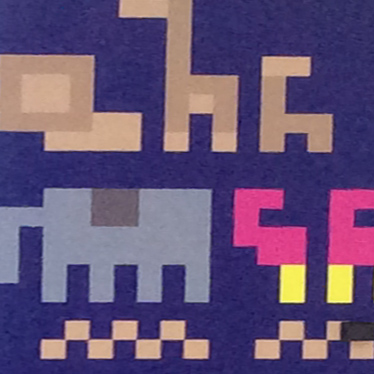
It also included a participative interactive installation called “Pixelscape” which you can see here:

These are the events I participated in:

– September 22nd: Opening Ceremony, Seoul Museum of Art

– September 23rd: Talk & Live iPad Drawing Demo, Project Gallery (3F), Seoul Museum of Art
Drawing on the Go! The Joy of Sketching on the iPad in the Urban Scape

– September 24th: iPad Drawing Workshop, Lecture room (B1), Seoul Museum of Art
Drawing on the Go! Learn how to draw on the go using the Sketch Club app on the iPad.

– September 25th, Mobile Drawing Workshop,gallery TOAST, organized by DigiFun Art.

Other artists participating in the Digifun Art Mobile Art Exhibition & Festival include Hong Seung-Hye, Hong Kyoungtack, Kim Yong-chul, Kim Yong-kwan, Park Gwang-soo, Lee Fi, Joanne Carter (TheAppWhisperer.com), Jörg Hinz, Ahn Seung-joon and Hong-kyu Kim. It was a pleasure meeting these fellow artists and getting to know the Korean mobile art community.

Thank you to Professor Ahn, Amy Chung and Sangwoo Kang of DigiFun Art and Ara Jo and her colleagues at the Seoul Museum of Art for organizing, and inviting me to participate in, this special mobile art festival. Thank you, WACOM, maker of the Wacom Intuos Creative Stylus 2 (one of the styluses I like to use), for sponsoring this festival.

I met Amy when I was speaking at the mobile Digital Art & Creativity (mDAC) Summit in Palo Alto last year. Thank you, mDAC, for helping bring together mobile artists from all over the world.

Photos included here were taking by various people including Joanne Carter, Ara Jo and Sangwoo Kang.

Ode to the Hardworking Pixel

Seeing the recent ads in the media for the film “PIXELS” made me think of the transformation I have witnessed in digital painting: from the efforts to avoid the dreaded jagged pixelation of the early ’90s, to the fact that the “Pixels” brush in the iPad app Sketch Club (one that can make brush strokes made up of squares, triangles, circles or irregular cells) became the favorite brush of the children I taught iPad painting to this summer, as they created their purposely pixelated World of Minecraft characters.

The article that prompted this essay. I read this in USA Today on July 20, 2015.

“Victoria”, 1991, digital portrait I created from life using Mac IIfx, Wacom pen tablet and PixelPaint Pro software. One of my earliest digital paintings – notice pixelation when zoomed in slightly. At that stage in computer graphics the file sizes were limited and the natural media emulation brush engines still gave some pixelation.

Student in my Introduction to iPad Painting class this summer (August 2015) uses the Pixels brush in Sketch Club to paint pixels in a Minecraft “papercraft”, later printed out on card and used to generate a three dimensional character.

Pixels have transformed from crude graphic pariahs to rock stars clothed in a new found hip coolth and basking in unexpected popularity. The underlying source of bitmap imagery has emerged from being a hidden actor to taking center stage.

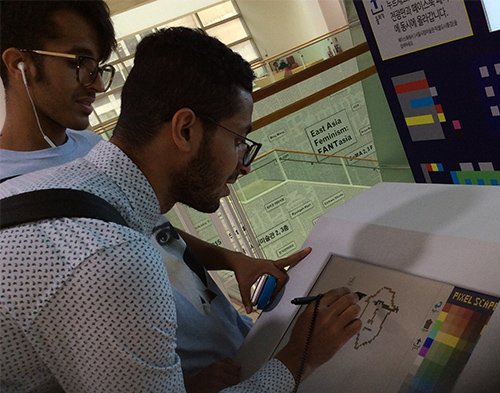
“Pixelscape”, an interactive installation at the “DigiFun Art: Urban Scape” Festival, Seoul Museum of Art, Korea, in which visitors create pixelated drawings which then become part of a larger collaborative artwork.

Following a quarter of a century that has seen the pixelated crudeness of the Pac-Man and Space Invaders early arcade video game imagery supplanted by the smooth semi-photo-realism of modern day internet virtual reality games, the return of pixelation in games like Minecraft comes almost as a nostalgic nod to the roots of digital imagery, a tap of the hat to an “old skool” era that predates the Millennials and Generation Zers now playing them.

Screen capture of the video arcade game “Space Invaders” c 1979

Screen capture of the game Monument Valley, one of the games, besides Minecraft, that my young students this summer liked to play in their breaks. Notice the combination of smooth surfaces and crude pixels.

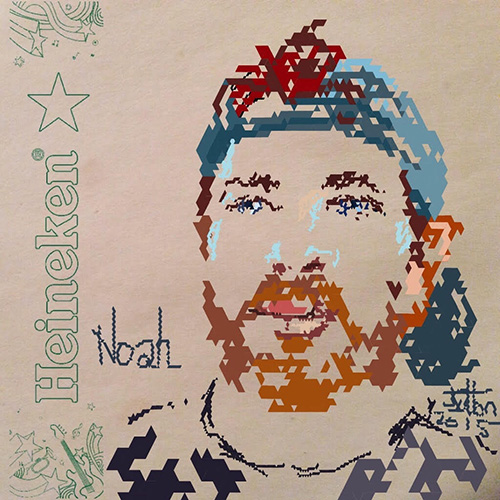
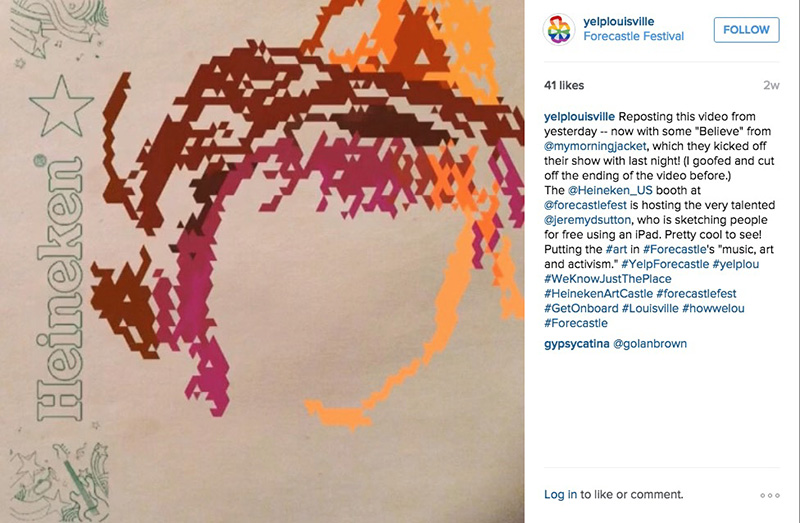
I must admit that, inspired by my young students, I have started enjoying playing with pixels as image elements. In fact when I was painting portraits recently in the Heineken stage of the Forecastle Festival in Louisville, Kentucky, I started using Sketch Club’s “Pixels” brush myself! I really enjoyed the rough elegance of the big geometric shapes and chose an option that created brush strokes made up of triangles instead of the perfect squares that my students preferred for their Minecraft characters.

Portrait of “Noah”, 2015, digital portrait created from life at the Heineken Art Castle in the Forecastle Festival, Louisville, Kentucky, using an iPad Air, Sketch Club app and Pencil by 53 stylus.
I am glad the hardworking pixel, which has given us bitmap painters so much pleasure and illusion over the years, now has it’s time back in the sun.

With happy pixelation,

Cheers,

Jeremy

Art Class for a Company Retreat
Villa Montalvo, Saratoga, CA

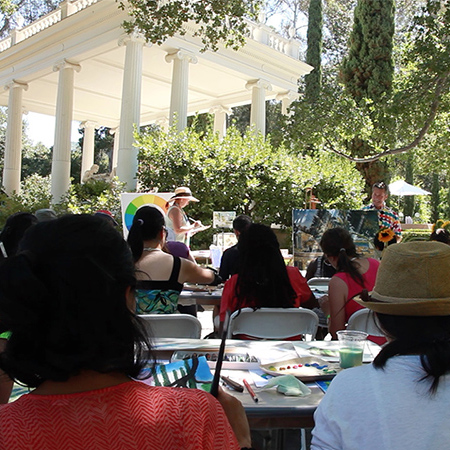
Peggy and I taught two short (each 75 minutes) plein air landscape painting sessions to two groups of participants at a company team building retreat in the historic Villa Montalvo, Saratoga, CA. The class took place in the beautiful Love Temple / Italianate Garden. You can see the results in the two group photos above. Each student painted from direct observation of the scene before them and created their own unique artwork that reflected their individual artistic vision.

We introduced the basics of composition, color mixing, and use of materials. We showed artwork examples by Vincent Van Gogh, Paul Cezanne and Henri Matisse to illustrate the principles and act as artistic inspiration. Everyone had fun and, no matter what their experience or background in art, everyone created wonderful artworks full of life!

I was impressed by the incredible richness and diversity of the results. With about sixty participants in total they created sixty completely different and unique interpretations and points of view. This is the power of paint, whether traditional or digital: the power to give everyone the opportunity to express themselves in a unique and personal way. Big thanks and congratulations to everyone who participated!

One student, who hadn’t painted for many years, shared how excited she was by getting to paint and that this class was a turning point for her and that as a result of the class she was going to continue to paint.

Thank you to Entire Productions and everyone involved in helping make this such a successful art class!

Turner “Varnishing Day” Tableau
de Young Museum, Aug. 14, 2015

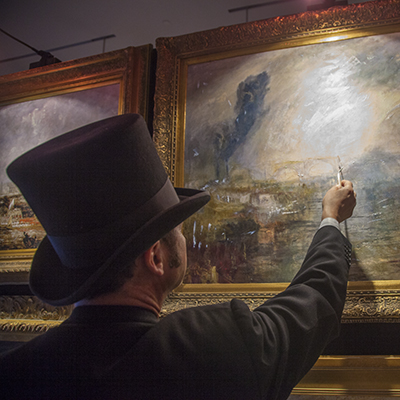
More than any of his colleagues, perhaps, J.M.W. Turner hugely enjoyed and exploited varnishing days, reveling in the sociability, and in the opportunity to paint in a public forum.
Art on the Line: the Royal Academy Exhibitions in Somerset House 1780 – 1836 (editor David H Solkin).


My Tableau Vivant performance of British artist Joseph Mallord William (“J.M.W.”) Turner pays homage to his love of live painting in the closing moments of the Varnishing Day prior to the opening of the Royal Academy Annual Exhibition held in Somerset House, London (the Academy later moved to its present location at Burlington House). The “Varnishing Day” was actually three days which were allowed for artists to add a touch of varnish to their paintings, or more than a touch in the case of Turner!

My Turner “Varnishing Day” Tableau Vivant performance was part of the de Young Museum’s Musical and Art Exploration Friday Night event, August 14th, 6 – 8:30pm. It took place in the Piazzoni Murals Room. This event celebrated the J.M.W. Turner: Painting Set Free exhibition which is up until September 20th and is well worth seeing. Here are photos and the video slidehow from the “Varnishing Day” tableau vivant performance:

This is the slide show that played on the screen throughout the performance. It is an eleven minute loop that shows the current Royal Academy as well as historical documentation related to the Royal Academy Annual Exhibitions and the Varnishing Days in particular.

The six paintings I displayed “salon style” in this performance tableau were, clockwise from top left:

The Opening of Waterloo Bridge (‘Whitehall Stairs, June 18th, 1817’)
by John Constable, exhibited 1832
Apparently Constable worked for thirteen years on this painting. A contemporary of Turner (born one year apart) they had an ongoing rivalry throughout their careers, trying to outdo each other at the annual Royal Academy Exhibitions. (more info)

The Thames above Waterloo Bridge
by J. M. W. Turner, c.1830–5
This painting depicts a rather similar scene to the Constable and makes one wonder if there wasn’t a little one-upmanship involved…
(for more info see Gaurdian article, Telegraph article and the Tate page)

Rain, Steam, and Speed – The Great Western Railway
by J. M. W. Turner, 1844
The scene depicts the Maidenhead railway bridge, across the Thames between Taplow and Maidenhead. The bridge, which was begun on Brunel’s design in 1837 and finished in 1839, has two main arches of brick, very wide and flat. The view is to the east, towards London. This painting makes me think of the impact of the industrial revolution on country life, how it shrunk the country and brought the city to the countryside.. (more info)

Self Portrait
by J. M. W. Turner, 1799
Painted when Turner was twenty four years old and a rising star. (more info)

Going to the Ball (San Martino)
by J. M. W. Turner, 1845
This painting was one in the first of two successive pairs of pictures (each depicting Venetian scenes in twilight and dawn going to and from a Ball) created by Turner in response to requests by potential patrons, William Wethered and Francis McCracken. The second pair were created after the first met with derision and rejection. The second set of pictures also drew negative reviews and the patrons got cold feet and ultimately reneged on their commissions. The paintings remained with Turner, unsold and unwanted, until his death. If only Wethered and McCracken could look back now on how much their rejected commissions are valued and lauded…(more info)

Sir William Chambers, Joseph Wilton and Sir Joshua Reynolds
by John Francis Rigaud, 1782
This portrait depicts the three leading members of the Royal Academy in 1782, Treasurer, Keeper and President respectively, each foremost in their different fields. Chambers the architect holds a set square and points to an architectural plan, Wilton the sculptor holds a mallet and Reynolds the painter leans on a portfolio which includes an outline representation of Reynolds’s portrait of Chambers which the artist gave to the Royal Academy. (more info)

Two of the three Turner’s I included in my tableau were featured in the J.M.W. Turner: Painting Set Free exhibition in London but did not make it to the American leg of the exhibition tour.

While I was performing, an artist, Jeannie Mecorney, who had attended my iPad Figure Drawing Class at the Mobile Digital Art & Creativity (mDAC) Summit the week before, drew me on her iPad and here are the results which she has kindly permitted me to share:

I was in the Royal Academy Library earlier this summer doing research in preparation for my Turner “Varnishing Day” Tableau, I came across the oil painting by artist Charles West Cope shown here (immediately below).

Painted around 1828, it is the only known image created from life of Turner painting in Somerset House, London, the home of the Royal Academy of Arts during Turner’s life time (the Royal Academy relocated to it’s current location in Burlington House, near Piccadilly Circus, in 1868). The other images at the top of this page show imagined cartoon recreations of Turner on Varnishing Days but are not thought to be drawn from life. According to Cope’s son, this little oil sketch on card made by his father shows Turner demonstrating his skills while acting as a ‘Visitor’ in the Royal Academy Schools, ‘with some of the porters or sweepers looking on’. Though not actually a varnishing day “performance”, it captures the showmanship that Turner brought to painting in front of onlookers. He was an early, if not the first, live event painter!

Big thanks to Peggy for video and photography!

Live iPad Portraits
Forecastle Festival 2015, Louisville, Kentucky

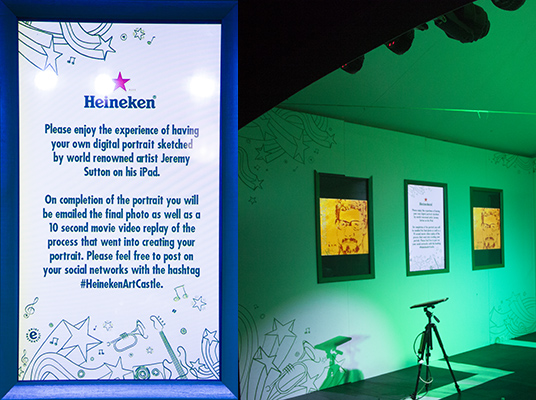
Live iPad portrait painting of festival attendees in the Heineken Art Castle tent at the Forecastle Festival 2015 in Louisville, Kentucky, July 17 – 19, 2015. I used an iPad Air, Sketch Club app and Pencil by 53 stylus. I share here a few of the portraits and subjects.


I loved your drawing!!!! – Emily, commenting on her portrait


It’s so amazing!!!! It’s beautiful. I love it so much. – Lesli, commenting on the portrait of her and Eric


Live iPad portrait of Archie created on the plane journey into Louisville (1m 29s). Archie remembers as a teenager watching Muhammad Ali, then Cassius Clay, training in the local gym and running past him on the streets during his training runs.

With thanks to the great Heineken team and crew, plus the wonderful Corso Agency folks – you were all wonderful to work with! Thank you also to the organizers of the Forecastle Festival and to the warm Kentucky hospitality of Louisville!

iPad Sketching Workshop at the Victoria & Albert Museum, July 11, 2015

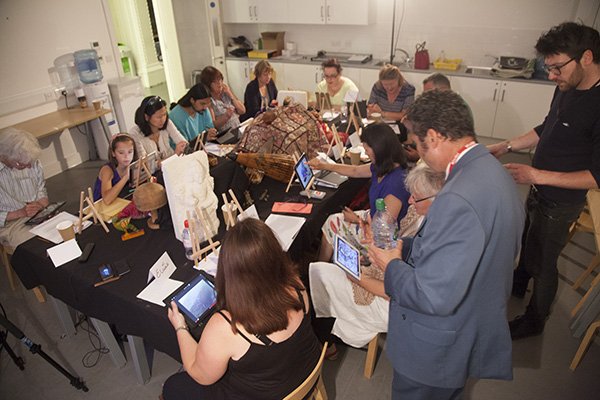
On July 11th a group of students and myself enjoyed a wonderful day of creativity, learning and fun at the beautiful and historic Victoria and Albert Museum in London, the world’s largest museum of decorative arts and design, housing a permanent collection of over 4.5 million objects.

It was founded in 1852 and named after Queen Victoria and Prince Albert. We focused on using the app Sketch Club. The students ranged from full time professional artists to those with no prior formal art training, and included some who were new to the iPad as well as experienced iPad artists. Everyone was able to successfully create many drawings throughout the day and record, replay and share their whole process, brush stroke by stroke. We took inspiration from a selection of items from the museum handling collection specially brought out for the purpose, and in the magnificent galleries (including the Ironworks gallery and the Weston Cast Hall). Here are some photos from the day.

Thank you for running such a wonderful session – the smiles on people’s faces as they left said it all. Thanks again for all your hard work in getting the most out of the day.
Alex F.
Team Leader, Digital Programmes
Victoria & Albert Museum

Great course Jeremy. I was both interested and impressed by the work presented and the way people are imaginatively exploiting the iPad for different purposes. Inspiring – there was a real buzz in the group as the potential started to seep through. Having it set in the museum with the objects on the table and then in the galleries really works. People latch onto the exhibits and spaces and get really into observational drawing. Wonderful! As always a lot of fun.
Victor L.-R.

Many thanks to all my wonderful students, and to Alex, Alessandro and the whole V&A Learning Centre team who organized and hosted this workshop and helped make it a special experience for all who attended.

Live iPad Painting at the Smithsonian American Art Museum’s “America Now! Innovation in Art” June 27th, 2015


Final painting created at the event.

Live iPad painting replay video of the art created at “America Now! Innovation in Art” (3m 50s)

Click here to see Smithsonian Magazine article This Is How You Live Paint an Event

Click here to see Smithsonian American Art Museum’s “Eye Level” blog article America Now! Live Painting in Our Kogod Courtyard

On Saturday, June 27th, 2015, between 4pm and 7pm, I performed live iPad painting at the Smithsonian American Art Museum’s “America Now! Innovation in Art” free public event in Washington, D.C. – the finale of the “America Now!” series. I worked on one painting throughout the event, inspired by the scene in the Robert and Arlene Kogod Courtyard. The resulting artwork is shown above. It is an observational painting created directly from scratch freehand, without use of photography. My painting process was displayed realtime on a large LED screen in the beautiful Robert and Arlene Kogod Courtyard of the Museum for attendees to enjoy. The event included electro-swing music from the band Good Co. and DJ Eliazar, which inspired my brush strokes! The band and DJ are both represented in the painting. I used an iPad Air with the app Sketch Club and the styluses Pencil by 53 and the Wacom Intuos Creative Stylus 2, all of which are fabulous tools I highly recommend.

I spent the day before this event in the museum (a building shared with their sister Smithsonian museum, the National Portrait Gallery) sketching and getting inspiration from the incredible art collection, as well as from the magnificent historical National Historic Landmark building in which the collection is housed. It is the third public building constructed in early Washington, D.C., (after the White House and the U.S. Capitol), former home of the Patent Office (from 1840), location of President Lincoln’s second Inaugural Ball, and one that was saved from demolition by an act of Congress. I then created a background, inspired by the collection, on which to begin my painting performance. If you look carefully you may even notice some elements of Malcah Zeldis’ Miss Liberty Celebration (1987), Romare Bearden’s Empress of the Blues (1974) and Marvin Beerbohm’s Automotive Industry (1940, Works Progress Administration commission for the Detroit Public Library) showing through.

Here are some photos from the event:


photo by Bruce Guthrie


photo by Bruce Guthrie


Using Wacom Intuos Creative Stylus 2 (left) and Pencil by 53 (right) with the app Sketch Club


With Jo Ann Gillula, Smithsonian American Art Museum, Chief, External Affairs, center, and, on the right, Betsy Broun, Smithsonian American Art Museum, The Margaret and Terry Stent Director (photo by Bruce Guthrie)


With Kaylin, Katy and Kara from the fabulous museum team before the event.

Here are some comments about my painting performance shared with me on my comments sheet and via email by attendees at this event:

“Truly incredible and inspiring! I now really want to try digital art!”
Maricio A.

“Thanks for taking the time to talk to my dad and me at the Smithsonian on Saturday! We loved the entire exhibit, but watching your iPad drawing progress was definitely one of the highlights.”
Emily S.

“Wonderful”
Waad T.

“Amazing!”
Khari W.

“Beautiful!!”
Jaquetta M.

Thank you and congratulations to the great staff of the Smithsonian American Art Museum who orgnaized this event, and to the generous sponsors of “Innovation in Art” and the “America Now!” series, the Robert and Arlene Kogod Family Foundation.

The concept that paved the way for this performance, in which I built up a painting of the scene throughout the event, was my live digital painting performance using Corel Painter on a MacBook Pro with a Wacom Intuos pen tablet at the Scotiabank Nuit Blanche arts festival in 2014, where my painting was displayed in real time on seven 8′ x 8′ screens along Spadina Street in downtown Toronto.

The painting of the saxophone player reproduced on the Smithsonian web and event pages associated with this event is my portrait of Erv that was created using Corel Painter and a Wacom IntuosPro pen tablet on an iMac.

Coincidentally my alma mater, Pembroke College, Oxford University, was also the alma mater of James Smithson who attended the college in 1782 and whose estate helped establish the Smithsonian Institute. Here’s a photo I took earlier this year of the plaque at Pembroke:

Please note that the web pages reproduced here are screen captures taken on the day before the event. Any blue “links” shown in the images are not live links! I’ve included links to the actual pages though they may have changed since I captured them.

Screen capture of the Smithsonian American Art Museum’s home page:

Screen capture of the Smithsonian American Art Museum’s “Innovation in Art” event calendar entry:

Screen capture of the Smithsonian American Art Museum’s “Innovation in Art” Facebook event:

Screen capture of the Washington Post’s Free Things to Do:

Screen capture of the National Portrait Gallery email letting their list know about the Smithsonian American Art Museum’s event:

Ooops…yellow spot just fell off my shirt onto the floor of the courtyard the day before the event! (..the spot on the floor is actually part of the interactive game installation “Starry Heavens” by Natalie Pozzi and Eric Zimmerman)

Here is the description of the event from the news release on the Smithsonian web site:

“America Now! Innovation in Art”
Saturday, June 27; 4–7 p.m.
Smithsonian American Art Museum
Robert and Arlene Kogod Courtyard
Eighth and F streets N.W.

On Saturday, June 27, the Smithsonian American Art Museum will close the series with “Innovation in Art.” Visitors will be able to explore how artists are using technology to propel their work.

Digital-paint pioneer Jeremy Sutton will paint a la David Hockney-style on an iPad, with the image projected on a large screen using motion-capture technology. Sutton will paint to the beats of electro-swing band Good Co. and DJ Eliazar.

Visitors will be able to wear an Oculus Rift, a virtual-reality headset for 3-D gaming, to explore Craig Gilbert’s 360-degree films, Earthborn Interactive’s games or be transported into artwork by Greg Aring.

In addition, attendees will have the opportunity to play the interactive game Starry Heavens, which debuted at MOMA in 2011. Created by architect Nathalie Pozzi and video-game designer Eric Zimmerman, the giant canopy for the game has been customized for the museum’s Kogod courtyard space to invoke the experience of the northern lights.

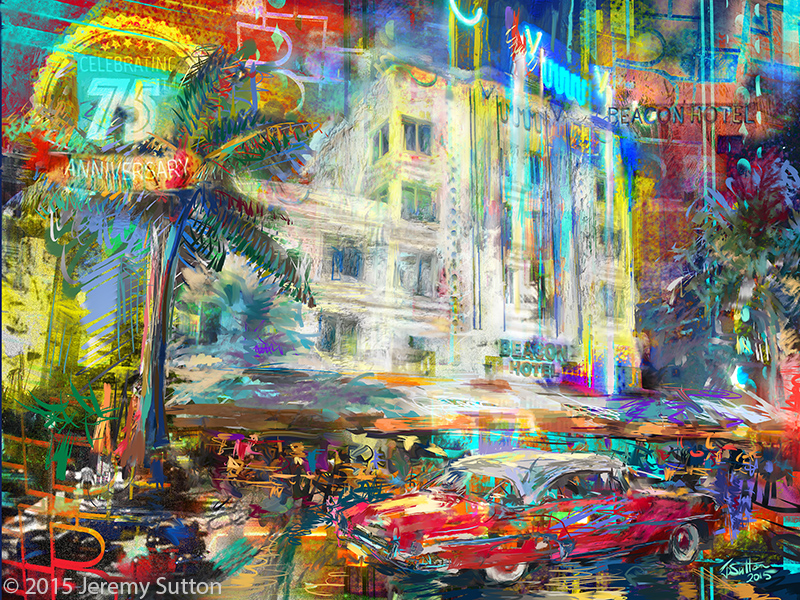
Beacon Bel-Air

”Beacon Hotel

Beacon Bel-Air
2015, 40″x 30″

This painting, part of my Miami Beach Art Deco Series, depicts a classic 1952 Chevrolet DeLuxe Bel-Air outside the historic Beacon Hotel at 720 Ocean Drive in South Beach, Miami. The painting includes the graphic for the 75th anniversary celebration of the hotel. The hotel was built in 1936 in the Art Deco style, designed by architect Henry O. Nelson. In Art Deco tradition, this hotel has a tripartite facade with a vertical emphasis, with horizontal details countering the upward movement. The central bay is thrust forward in small steps and even the top rises in stair steps. The boundary between the central and side bays is filled with abstract patterns – skewed diamonds and circles. The top has semicircles and angular patterns. The countering horizontal movement is in the relief stripes in the spandrels. (Click here to learn more about the hotel’s history and click here to see photos on the hotel web site.)

The painting is based on, and inspired by, my stay at the hotel during the 2015 Art Deco Weekend on Ocean Drive. I took reference photos at different times of the day, inside and outside the hotel. I was inspired by wonderful quality of light; the shapes, colors, architecture and design details of the building; and the history, style and character of both the hotel and the car. I also referenced historical documentation such as a photo (shown here) of the hotel in 1937, just a year after it opened.

”Beacon Hotel

The artwork is a mixed media painting (pigment ink and acrylic on canvas). The process of creating this artwork included freehand digital painting with use of Corel Painter 2015, Wacom pen tablet and Macintosh computer; UltraChrome pigment ink large format archival output on specially prepared high quality canvas; and acrylic gel and paint applied directly onto the canvas with brushes and palette knives.

Thank you to Elvis Taylor, General Manager at the Beacon Hotel, and to Veronika Volovik, Web Marketing Director, and all the rest of the staff at the Beacon Hotel for their warmth and hospitality. Thanks to Lana and Irvin Becker for bringing their beautiful ’52 Chevy to Art Deco Weekend and thus providing the perfect compositional element for my painting!

”Beacon HotelThe painting in the lobby of the hotel

This painting is part of my Miami Beach Art Deco Series which currently comprises:
Avalon Olds
Beacon Bel-Air
Majestic Kaiser
Breakwater Chevy
Ocean Surf Caddy
Park Central Olds

May 2015